
Pull weeds small
Weeds in rock pull out easily while they are young and badly once they root into the debris layer. A quick pass every few weeks in the growing season beats a big pull once a year.

Lava rock installation and rock-bed refreshes for South Surrey, White Rock & Delta — weeded, edged, spread evenly and cleaned up, on one fixed written quote.
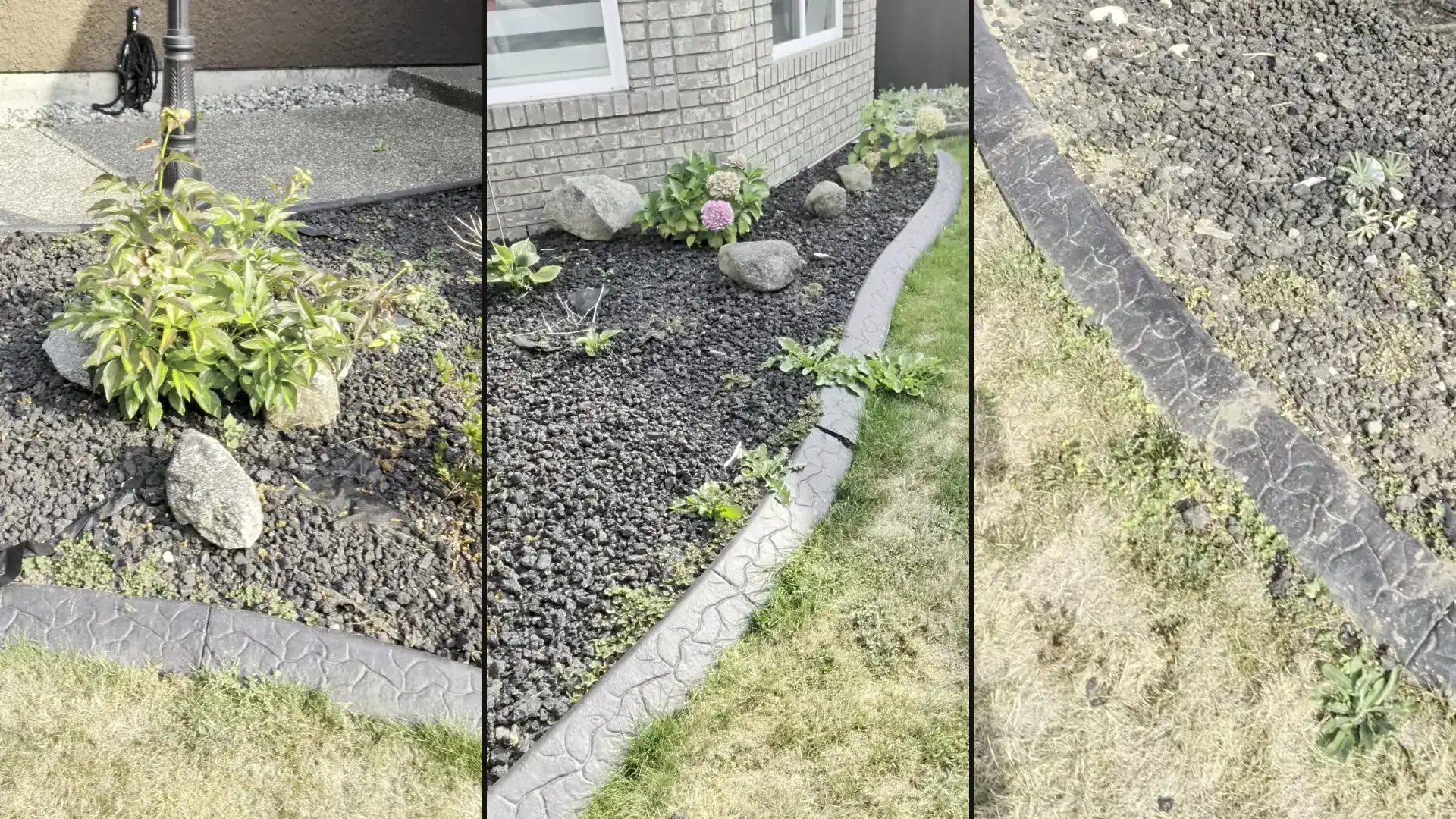
A real Ironwood rock-bed refresh — weeds cleared, the bed reset, fresh dark lava rock spread and new plants set in. When you are ready, we will do yours.
Rock tipped over a weedy bed looks good for a month. What makes a rock bed stay clean is the preparation underneath and the edge around it. Here is our standard scope for a new lava rock bed or a refresh of an existing one:
Lava rock is a porous volcanic stone, usually sold in dark charcoal or red. It is a good bed finish in the right spot and a frustrating one in the wrong spot. Here is the honest comparison with bark mulch:
| Factor | Lava rock | Bark mulch |
|---|---|---|
| Breaking down | Does not decompose. The colour fades slowly and the layer thins as rock settles or gets kicked out, but it is not replaced every year. | Decomposes into the soil over a few seasons. Good for the soil, but it wants a top-up every year or two. |
| Weight & handling | Much lighter than river rock or other stone of the same size, so it is easier to move and spread — but it is sharp-edged and rough on hands and knees. | Light and soft; easy to work around plants. |
| Heat | Holds heat in full sun, especially against a south- or west-facing wall. Worth thinking about around plants that dislike hot roots. | Keeps the soil cooler and holds moisture. |
| Leaves & debris | The hardest part of owning it. Leaves and needles lodge in the rough surface and the gaps, and have to be blown or raked out carefully. | Leaves can be left to break down or raked off with the top layer. |
| Weeds | Suppresses weeds from below, but windblown seeds sprout in the grit and debris that collects on top — rock beds are not weed-free. | Suppresses weeds while deep enough; weeds on top pull out easily from soft mulch. |
| Feeding the soil | Adds no organic matter. Beds under rock rely on what is already in the soil. | Adds organic matter as it breaks down. |
| Best fit | Low-planting beds, narrow strips beside curbs and foundations, and frontages where you want a clean, consistent finish. | Planted beds, shrub borders and gardens where soil health matters most. |
Leaning toward bark instead? See our mulch installation page — we install both, and plenty of properties use rock in one bed and bark in the next.
Most lava rock guides say always use fabric. Yet plenty of tired rock beds have fabric in them — torn, surfacing, and growing weeds on top. Both things are true, so we decide bed by bed.
We will tell you which way we recommend for your beds, and why, before anything is quoted.
Rock does not rot, so an old rock bed can often be brought back without replacing everything. What decides it is what is under and between the stones:
| Clean & top up | The rock is sound and mostly still there — it is just faded, thin in places and weedy. We weed, clear the debris, reset the edge, and top up with fresh rock so the colour is even again. |
|---|---|
| Partial rebuild | Parts of the bed have filled in with soil and roots, or fabric is showing. We rake out the failed areas, fix the fabric, and rebuild those sections before topping the whole bed. |
| Full replace | The bed is more soil than rock, weeds are established everywhere, or you want a different material. Everything comes out, the bed is prepared from the soil up, and new rock goes down. |
| Depth | A commonly used range for lava rock is about 2 to 3 inches — deep enough to cover the soil or fabric completely, shallow enough to stay stable. Rock size and the bed itself change the right number, so we confirm it per bed rather than quote one depth for everything. |
| Edging | Rock beds without a firm edge slowly spill into the lawn. Where there is an existing curb or border, we clean it and work to it. Where there is none, we talk through the edge the bed needs at the site visit. |
A front garden we brought back — rooted weeds cleared from tired rock beds, exposed fabric dealt with, curbs cleaned, fresh dark lava rock spread and new plants set in.
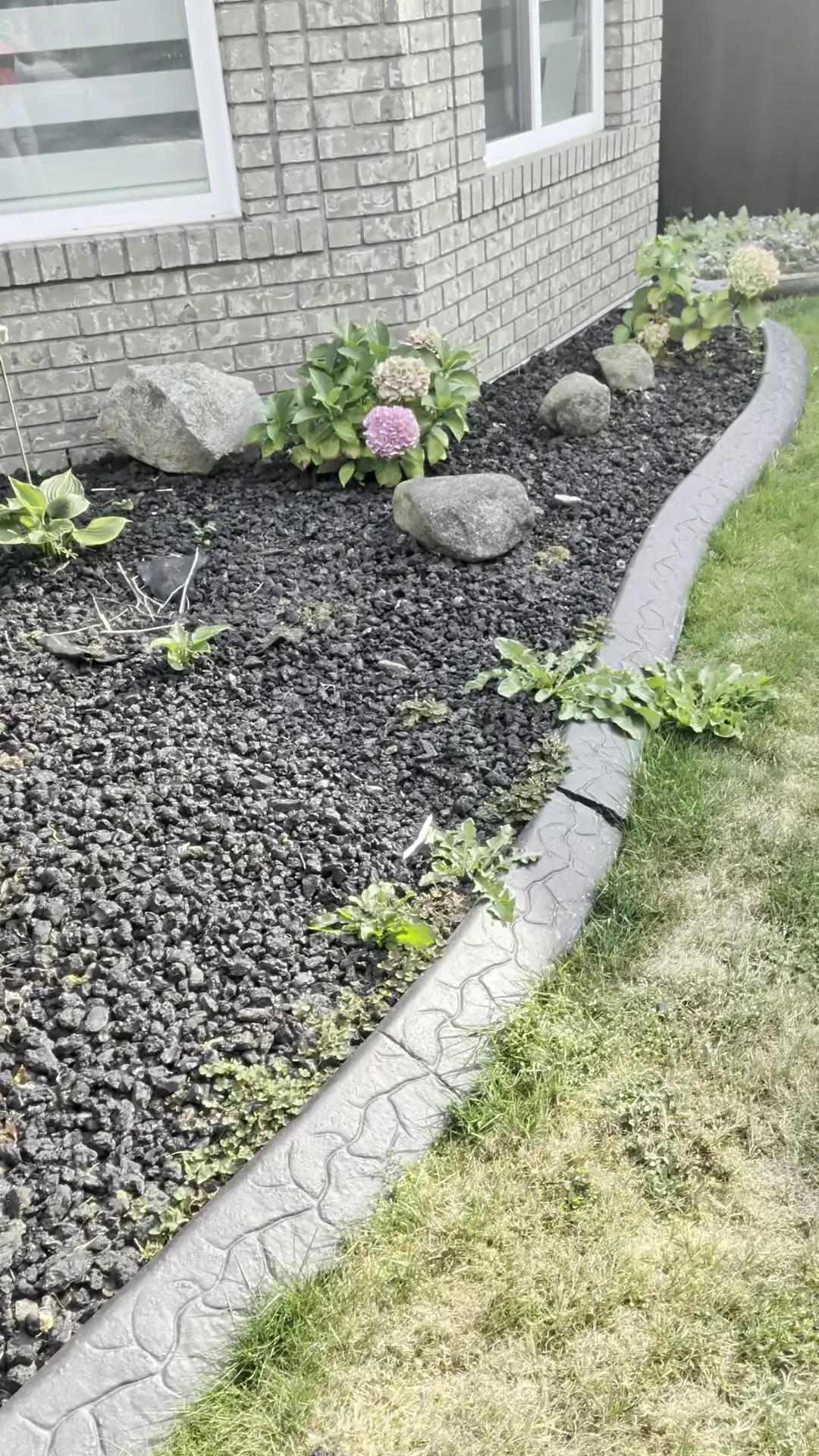
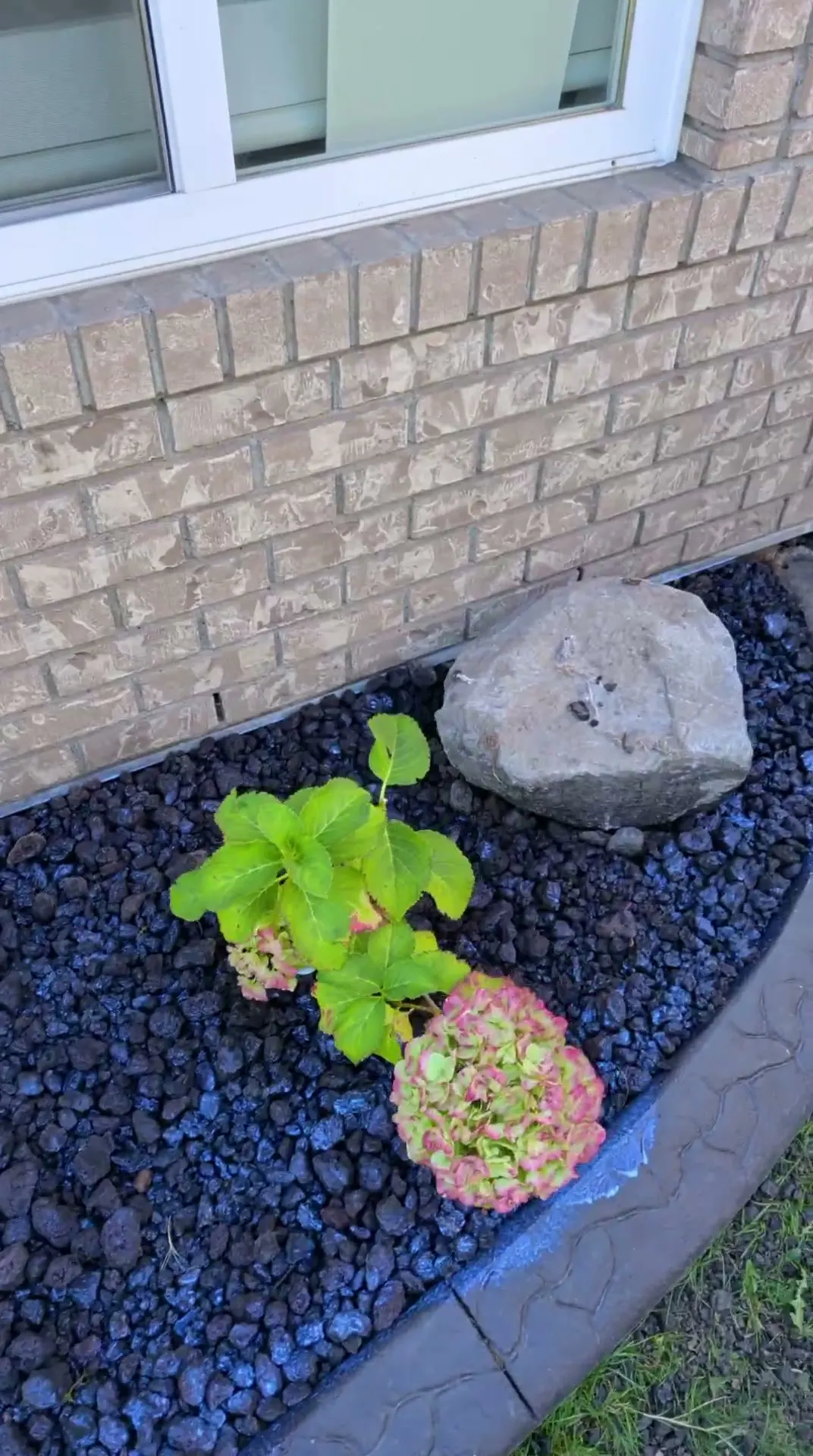
Weeds pulled, debris cleared, fresh lava rock spread around the existing planting.
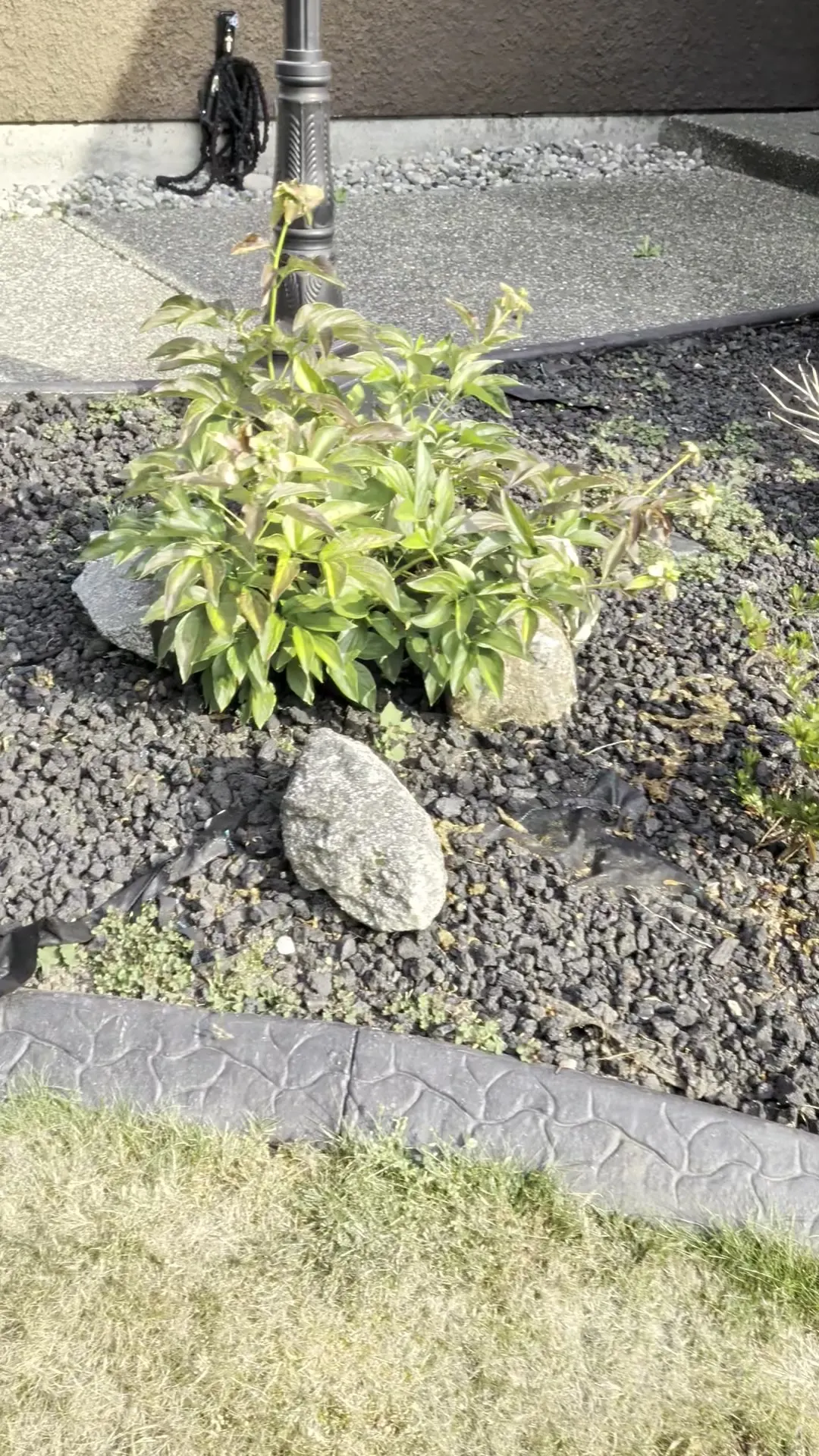
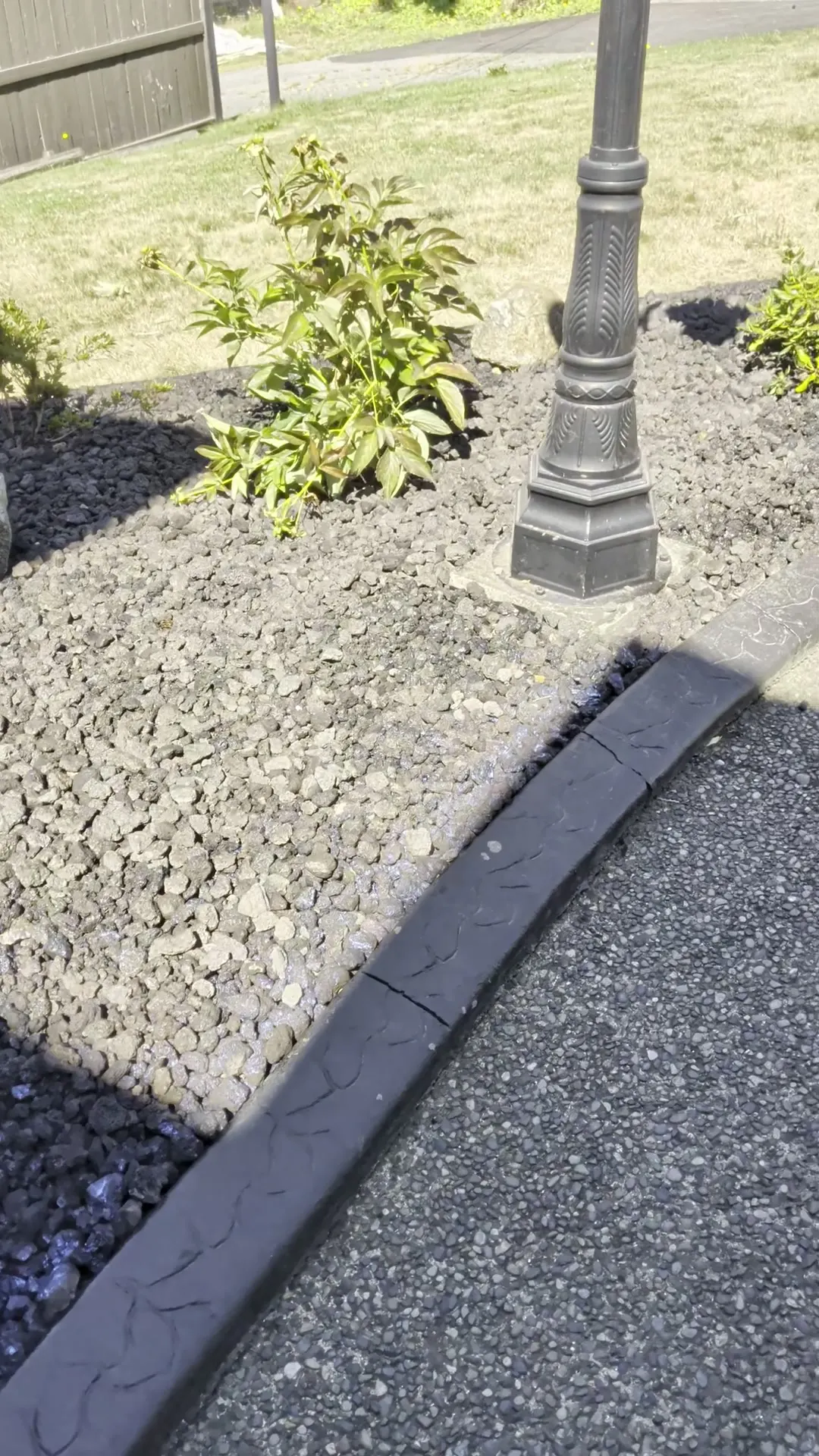
Exposed fabric and rooted weeds removed, the rock levelled, and the curb line brought back.
A rock bed saves you the yearly mulch top-up. It does not save you from leaves, seeds and the odd weed. Three things keep one looking finished:
Weeds in rock pull out easily while they are young and badly once they root into the debris layer. A quick pass every few weeks in the growing season beats a big pull once a year.
Leaves left in rock break down into soil, and soil is what weeds need. Clear them in fall and again in spring — a blower on low works on most beds. Our seasonal cleanups include it.
Rock gets kicked onto lawns and settles in low spots. Raking it back and adding a little fresh rock where it has thinned keeps the colour even without redoing the bed.
No hourly rate, no surprises. You know the full price before any rock is ordered.
We walk the beds together, measure them, and talk through refresh or replace, fabric, edging and any planting — usually within one business day of your request.
One clear written price covering preparation, rock, delivery, spreading, any planting and cleanup. No pressure to decide on the spot.
Weeds and debris out, fabric sorted, edges cleaned, plants set in, delivery timed, rock spread evenly and kept clear of stems and drains.
We walk the finished beds with you, and if you want them kept this way, our grounds care visits cover weeding and leaf clearing.
Working out the rest of the yard, or want to run the numbers first?
Staying local keeps scheduling tight. Ironwood Grounds installs and refreshes rock beds across South Surrey, White Rock, Ocean Park, Morgan Creek, Tsawwassen, Ladner and the wider Delta area.
It is a good choice for beds where you want a clean, consistent finish that does not need replacing every year — narrow strips, foundation beds and lightly planted frontages. It is a poorer choice under trees that drop a lot of leaves, and in heavily planted beds where the soil benefits from organic mulch.
Neither is better everywhere. Lava rock lasts far longer and keeps its look with less topping up; bark mulch keeps soil cooler, holds moisture and feeds the soil as it breaks down. Many properties use rock in some beds and bark in others, and we install both.
Not always. Fabric keeps rock from sinking into the soil and makes a future refresh easier, but it does not stop weeds that seed into debris on top of the rock, and torn or shallow fabric becomes a problem of its own. We decide per bed and explain the reasoning before we quote.
A commonly used range is about 2 to 3 inches — enough to cover the soil or fabric completely without the bed becoming unstable. Rock size and the bed itself change the right depth, so we confirm it per bed.
Usually because leaves, grit and windblown seeds have settled between the stones and built up a thin layer of soil on top. Weeds root into that layer whether or not there is fabric underneath. Clearing debris regularly and pulling weeds while they are small is what keeps a rock bed clean.
Often, yes. If the old rock is sound and the bed has not filled in with soil and roots, we weed, clear the debris and top up with fresh rock. If the bed is more soil than rock, or fabric is torn and showing, parts or all of it need to come out first.
It can. Dark lava rock in full sun holds heat, especially against a south- or west-facing wall. Most tough shrubs cope, but plants that dislike warm roots do better in bark mulch or with the rock kept back from their base.
A leaf blower on a low setting or a light rake works on most beds; wet, matted leaves are easier to lift once they dry. Clearing leaves in fall and again in spring stops them breaking down into the soil layer that weeds grow in.
Yes. We plant for customers as part of a rock install or refresh — the plants are set in first, the rock is spread around them, and it is kept pulled back from the stems.
Multiply bed length by width by depth to get the volume, then convert to cubic yards. Our mulch calculator does exactly that math, and it works the same for rock. Rock is often sold by volume, but check how your supplier sells it before ordering.
The Peninsula communities of Metro Vancouver: South Surrey, White Rock, Ocean Park, Morgan Creek, Tsawwassen, Ladner and the wider Delta area.
Tell us a little about the beds and we will set a site visit — usually within one business day — then put one clear written price in your hands.