
It binds. It does not weed, drain, or think.
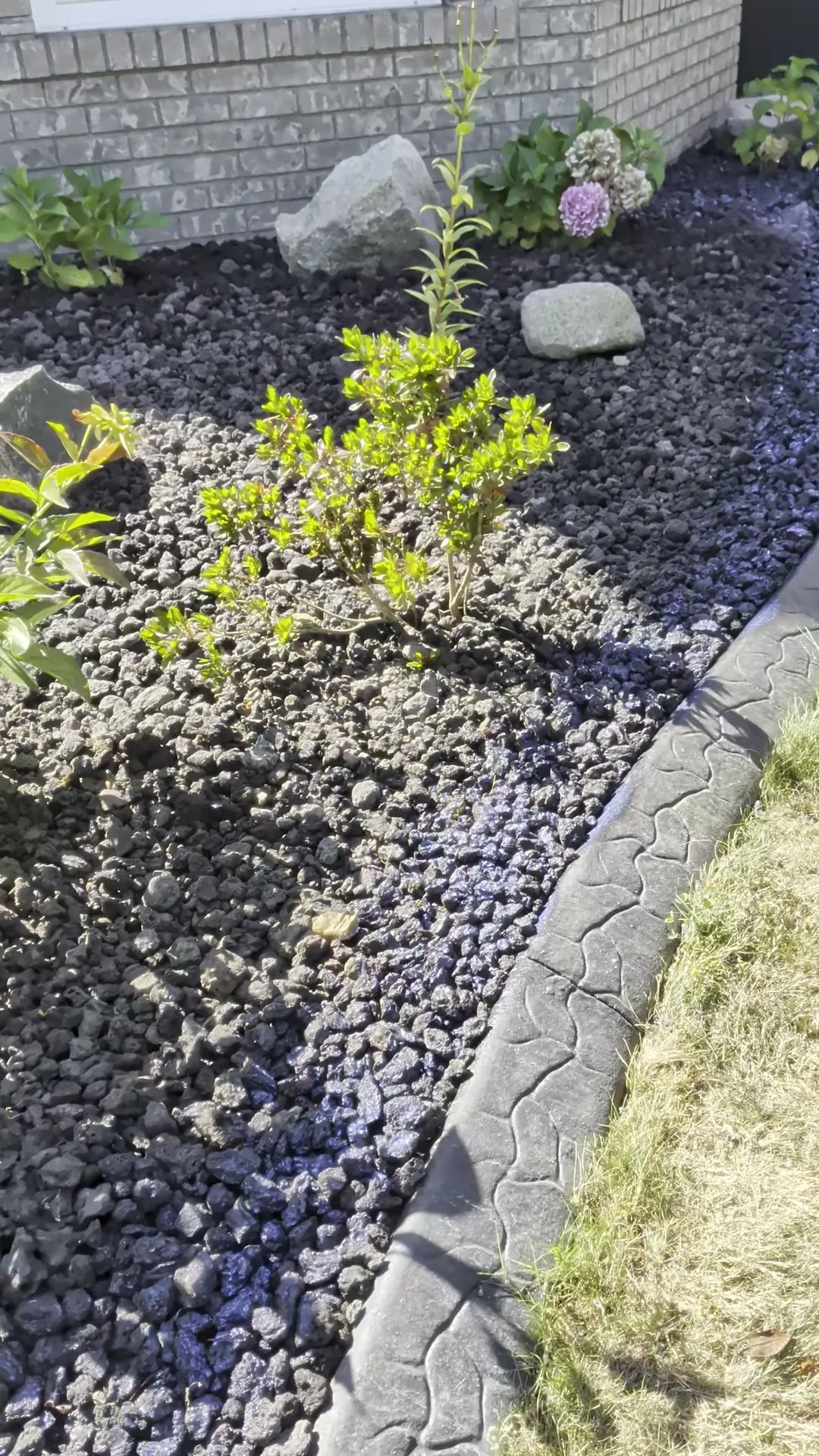
Mulch glue — sold as mulch binder or stabilizer — is a sprayable adhesive that binds the top layer of mulch, bark or small stone so it moves less in wind, rain runoff and leaf-blowing. Applied correctly to the right bed, it does that job. It does not stop weeds, fix a bed that is too shallow, or survive coastal weather forever. It is a maintenance product for specific problem spots — not a default upgrade for every bed.
| Worth considering | Sloped beds that shed mulch after every storm; exposed, windy frontages; bark or rock beside high-traffic walkways; properties maintained weekly with leaf blowers. |
|---|---|
| Usually not worth it | Flat beds with a defined edge and proper depth — gravity and a good edge already hold the material for free. Spending on preparation beats spending on glue. |
| Never the answer for | Weed control, thin mulch, failing bed preparation, or drainage problems. If the bed has those issues, stabilizer just glues the problem in place. |
Product truths, not universal promises.
Several water-based mulch binders are sold in BC — for example Liquid Rubber's mulch glue, OXINORA's rock-and-mulch adhesive carried by RONA, and ProLong's stabilizer. Each publishes its own coverage, dilution, curing and longevity figures, and they are not interchangeable.
| Drainage | Garden-use products are generally designed to stay water-permeable when correctly diluted and applied — but permeability is a per-product claim, and over-application can reduce it. Check the label, and ask your applicator what they are using. |
|---|---|
| Longevity | Manufacturers publish their own lifespan figures, and every one assumes correct application. Coastal rain, sun and leaf-blower traffic sit at the demanding end of any published range — plan on reapplication, not permanence. |
| Plant & pet safety | Water-based, low-VOC formulations are common, but safety statements belong to the specific product label and its safety data sheet — not to "mulch glue" as a category. Read the label of the product actually being used. |
| Application window | Every label agrees on one thing: dry material, dry weather, and a curing window without rain. On the wet coast that makes scheduling a real constraint — a rushed application in damp conditions is how the product gets its bad reviews. |
| Suitable materials | Bark mulch, wood chips, pea gravel and small decorative stone are the typical intended uses. Coverage per litre varies by material and porosity — porous bark drinks more product than smooth stone. |
What we check before recommending it.
When a customer asks about stabilization, we look at three things on site: whether the bed actually loses material (or just looks tired), whether preparation and edging would solve it for less, and whether the slope or exposure genuinely justifies the add-on. If glue is the right call, we schedule it around a dry window, follow the manufacturer's label for the product we are using, and tell you what that product is.
If it is not the right call, we say so — a stabilizer sold onto a flat, well-edged bed is margin for the contractor, not value for you.
The details people ask about.
Does mulch glue really work?
For its actual job — binding the top layer of mulch, bark or small stone so it moves less in wind, rain runoff and leaf-blowing — yes, a properly applied stabilizer can work. It is not magic: it does not stop weeds, replace proper depth or bed preparation, and it wears with weather.
How long does mulch glue last?
It varies with product, dilution, weather exposure and traffic — manufacturers publish their own longevity figures, and real-world exposure on the wet coast sits at the harder end of any range. Treat it as a maintenance product that needs periodic reapplication, not a one-time permanent fix.
Can weeds get through mulch glue?
Yes. Mulch glue binds material together; it is not a herbicide or a weed barrier. Weeds already rooted below will still push through, and seeds that land on top can still germinate. Weed control comes from removing weeds before mulching and keeping adequate depth — see how we prepare beds.
Does water drain through mulch glue?
The water-based products sold for garden use are generally designed to remain permeable when correctly diluted and applied — but permeability is a product-specific claim, not a universal law. Over-application can reduce it. Check the label of the specific product, and confirm what your applicator is using.
What are the disadvantages of mulch glue?
It adds cost, it needs dry material and a dry curing window — a real scheduling constraint on the coast — it wears and needs reapplication, it can crust or discolour if over-applied, and it makes topping up or reworking a bed slightly harder. On flat, well-edged beds it often is not worth it.
Is mulch glue worth it?
Worth it: slopes that shed mulch, exposed windy frontages, beds beside high-traffic paths, and properties maintained with leaf blowers. Not worth it: flat beds with defined edges and adequate depth, where gravity already does the job for free. That judgment call is exactly what a site visit is for.
Can a leaf blower be used after mulch glue?
Reducing leaf-blower scatter is one of the main reasons people apply it, and a bound surface does hold up better. How much better, and for how long, depends on the product, the application and the blower — expect improvement, not invincibility.
Sources, and an honest disclaimer.
This guide reflects our field experience installing and maintaining beds on the Peninsula, plus the published product information for water-based mulch binders sold in BC — including Liquid Rubber mulch glue (MyPond), OXINORA rocks & mulch glue (RONA) and ProLong mulch glue (Sylvite). Product listings checked August 27, 2026.
Specifications change and products differ — for any application, the current manufacturer label and safety data sheet of the specific product govern, not this page.
Last reviewed: August 27, 2026.