
Hedge Trimming & Shaping
Overgrown, uneven hedges brought back to a clean, even line — trimmed for the finished face, pruned where a hedge is thin or damaged, and every clipping raked up and hauled away.

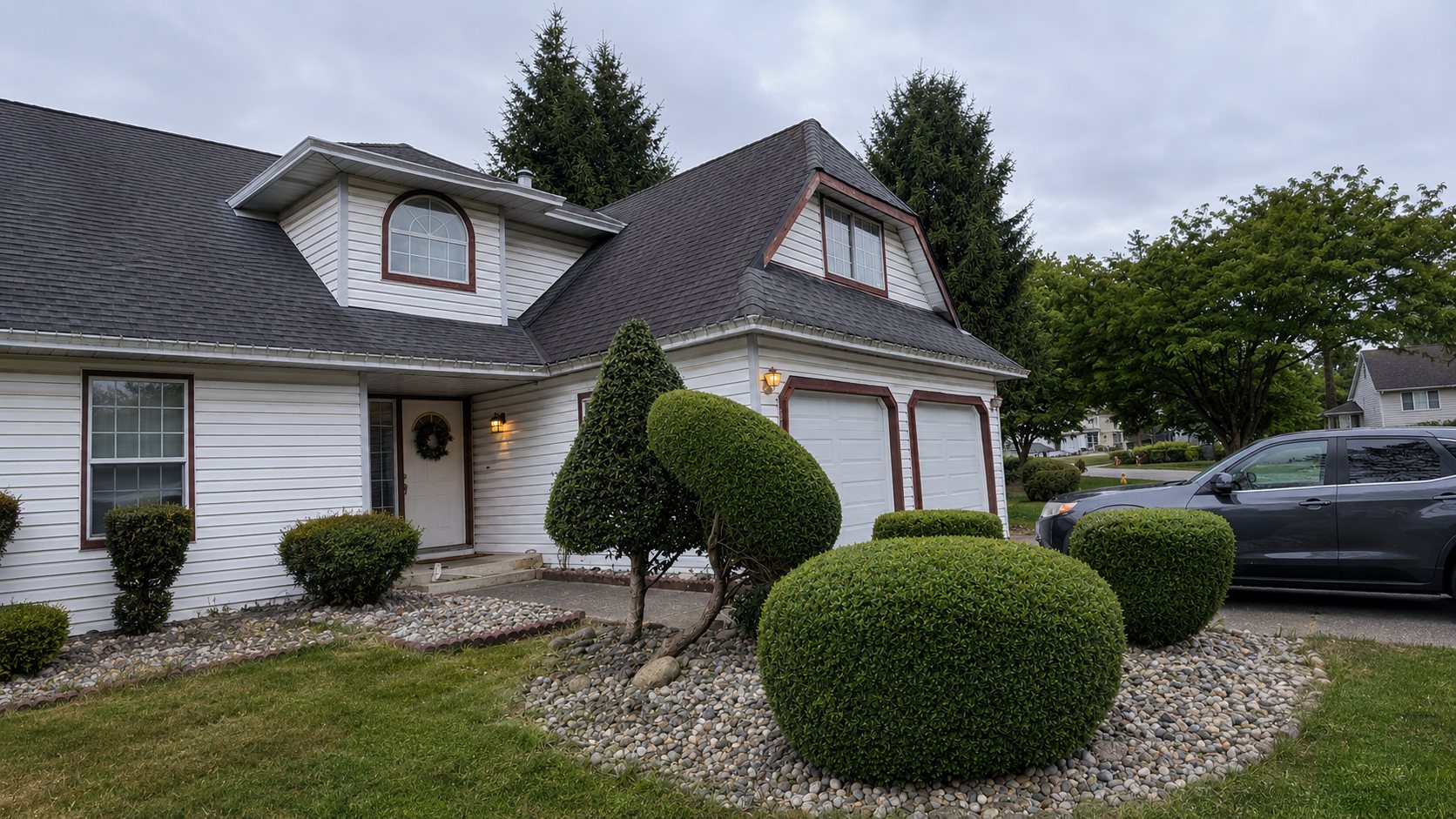
Shapeless, tired hedges on the Peninsula's finest properties — brought back to crisp topiary and clean, even lines.
Sculpted hedges, tidy beds, and seasonal upkeep that keeps a finished property looking its best. When you are ready, we will shape yours.
Hedge trimming and shaping, hedge reduction, topiary and the grounds care around them — one local team across South Surrey, White Rock and Delta. Every quote is a fixed written price after a site visit, and every clipping is hauled away.
Overgrown, uneven hedges brought back to a clean, even line — trimmed for the finished face, pruned where a hedge is thin or damaged, and every clipping raked up and hauled away.
A hedge that has outgrown the yard, taken down in height or pulled back off a path, driveway or fence line. Cedar does not regrow from bare brown wood, so we reduce it in stages and keep green on every face; laurel generally takes a harder cut. Removing large hedge trees can need a city permit — see our guide to the Surrey tree bylaw and hedges.
Sculpted shapes, arches, and formal topiary detailed and maintained — so a signature hedge stays sharp instead of slowly losing its form.
Seasonal upkeep that keeps hedges, beds, and the grounds around your fence looking the way they did on the day the work was finished. See grounds care and mulch installation.
The finishing work around hedges, beds and fence lines — quoted the same way as everything else here: one site visit, one fixed written price, debris hauled away.
Ironwood Grounds is a small, owner-run operation on the Peninsula — not a rotating crew of subcontractors. You deal with the person who quotes your hedges, shapes them, and stands behind the work.
We take a limited number of properties at a time so every hedge gets a careful, even line. Real care, fixed written quotes, and grounds we are glad to put our name on.
No hourly rate, no surprises. You know the full price before we lift a single blade.
We walk the property, look at every hedge and bed, and talk through the shape and height you want — usually within one business day of your request.
One clear written price for the work. No hourly rate, no line-item surprises, no pressure to decide on the spot.
Clean, even lines cut by hand and machine, topiary detailed, beds tidied — and all clippings raked up and hauled away.
We walk the finished grounds with you, and set a simple seasonal schedule if you want the lines kept crisp year-round.
Cedar and laurel hedges line a lot of Peninsula property lines, and the wet coastal climate keeps them growing fast. The work is the same everywhere we go — the local rules are not, because South Surrey, White Rock and Delta are three different cities with three different tree bylaws.
Long cedar runs on larger lots, often doing the job of a fence. Routine trimming does not need a permit, but Surrey protects trees with a trunk of 30 cm or more measured 1.4 m above grade — so taking out or heavily cutting a big hedge tree is a different conversation. Details in our Surrey tree bylaw and hedges guide.
Hillside lots and ocean exposure, where a hedge is often a windbreak or a privacy screen between close neighbours. White Rock has its own bylaw with a lower size line — trees of 20 cm or more at 1.4 m are protected — and pruning limits that apply to them. Worth checking before any big reduction.
Coastal wind and salt air shape how hedges grow on the exposed side. Tsawwassen is in the City of Delta, whose tree bylaw treats every 5 metres of a hedge as one tree for permit purposes — so removing a long hedge of bylaw-size trees is a permit job, not a trim.
Established gardens near the village, where a hedge has often been part of the yard for a long time. Same Delta bylaw as Tsawwassen: pruning done to recognised arboricultural standards is exempt, while cutting down bylaw-size hedge trees needs a permit first.
Light shaping works from late spring into early fall, and an early-fall trim keeps a hedge tidy through the wet months. Hard reductions depend on the plant: laurel and other broadleaf hedges are usually cut back in late winter or early spring, before new growth; cedar is reduced gradually in the growing season. We avoid heavy cutting in hard frost or a heat wave.
Hedges are prime nesting cover. Under section 34 of BC's Wildlife Act it is an offence to destroy a bird's nest while it is occupied by a bird or its eggs, so in spring and summer we look before we cut — and leave an active nest's section for a later visit.
Staying local is how we keep quality high and scheduling tight. Ironwood Grounds shapes hedges across the Peninsula — South Surrey, White Rock, Ocean Park, Morgan Creek, Tsawwassen, Ladner and the wider Delta area.
Most Peninsula hedges look their best with a light shaping once or twice a year — typically late spring and again in late summer. Fast-growing cedar and laurel may want a third touch-up. We tell you what yours actually needs rather than sell visits you don't.
For cedar and most conifer hedges on the coast, late spring through summer is ideal — once the first flush of growth has hardened. We avoid hard cutting in deep winter or during a heat wave, which stresses the plant.
Light shaping works from late spring into early fall, and an early-fall trim keeps a hedge tidy through winter. Hard reductions depend on the plant: laurel and other broadleaf hedges are usually cut back in late winter or early spring, before new growth, while cedar is reduced gradually during the growing season.
Taking a hedge down in height, pulling its sides back in, or both. Cedar does not regrow from bare brown wood, so we reduce it in stages and keep green growth on every face; laurel generally tolerates a harder cut. We tell you on site how far yours can safely go in one visit.
Trimming shears the outer face back to a clean line. Pruning is selective — cutting individual branches to thin a hedge, open it up, or remove dead and damaged wood. Most hedge visits use both: pruning where the hedge needs it, trimming for the finished line.
Routine trimming generally does not. Removing a hedge, or heavily cutting larger trees within it, can: Surrey, White Rock and Delta each protect trees above a set trunk size, and Delta counts every 5 metres of hedge as one tree for permits. Our Surrey tree protection bylaw and hedges guide has the details and the official links.
We check first. Under section 34 of BC's Wildlife Act it is an offence to destroy a bird's nest while it is occupied by a bird or its eggs, so if we find an active nest we leave that section and come back once it is empty.
Yes. Every trim includes cleanup and haul-away — beds raked, clippings removed, and the property left tidier than we found it.
Usually, yes. Many overgrown hedges can be brought back to a clean line over one or two seasons, and some in a single visit. We are honest on-site about what is recoverable and what isn't.
Both. Book a single reshape, or a seasonal schedule that keeps the lines crisp year-round. No lock-in contracts.
We are equipped for the tall, established hedges common on Peninsula properties. If a hedge is beyond safe reach, we say so rather than risk a poor or unsafe cut.
The Peninsula communities of Metro Vancouver: South Surrey, White Rock, Ocean Park, Morgan Creek, Tsawwassen, Ladner and the wider Delta area. That includes hedge trimming in Tsawwassen and Ladner, not just Surrey.
Yes. Ironwood Grounds is WorkSafeBC insured, which covers our crew while they work on your property — worth confirming with any contractor before work begins.
Tell us a little about the property and we will set a site visit — usually within one business day — then put one clear written price in your hands.