
Two materials, two different jobs.
This is not really a rivalry — the two materials are good at different jobs. Western red cedar carries its own natural decay and insect resistance, has a very low shrinkage factor with outstanding resistance to warping and twisting, and weathers to a soft silver-grey. It is the material you want to look at for twenty years. Pressure-treated lumber is ordinary softwood infused with preservative under pressure — cheaper, and when rated for ground contact it is designed to live in soil, which is exactly where even cedar struggles. Its trade-offs: the green-brown cast of the treatment, a utilitarian look, and a habit of warping, twisting and checking as it dries. The right answer for most BC fences is both: treated wood where the fence meets the ground, cedar everywhere you see.
| Western red cedar | Pressure-treated | |
|---|---|---|
| Decay resistance | Natural — the wood itself resists rot and insects in this climate, no chemicals needed. Vulnerable only in prolonged ground contact. | Chemical — preservative forced into the wood. Ground-contact-rated grades are built to live in soil. |
| Stays straight? | Yes — very low shrinkage; resists warping, twisting and checking better than other softwoods. | Commonly moves as it dries: warp, twist and surface checks are normal, especially on boards. |
| Appearance | Fine grain and warm colour; weathers to silver-grey, or holds a stain if you prefer the warmth. Finished from both sides in board-on-board. | Green or brown cast from the treatment; utilitarian. Can be stained after it dries out, which takes months. |
| Upfront cost | Higher — it is the premium material. | Lower — the budget option per board. |
| Where it belongs | Panels, boards, rails, gates, caps — everything you see and touch. | Ground contact: base boards, kickboards, and structural members in soil-moisture zones. |
| In coastal air | Pair with corrosion-resistant hardware — the fasteners, not the cedar, are what salt air attacks first. | Same hardware rule applies; use fasteners rated for treated lumber, which is corrosive to bare metal. |
Treated at the ground. Cedar where you see it.
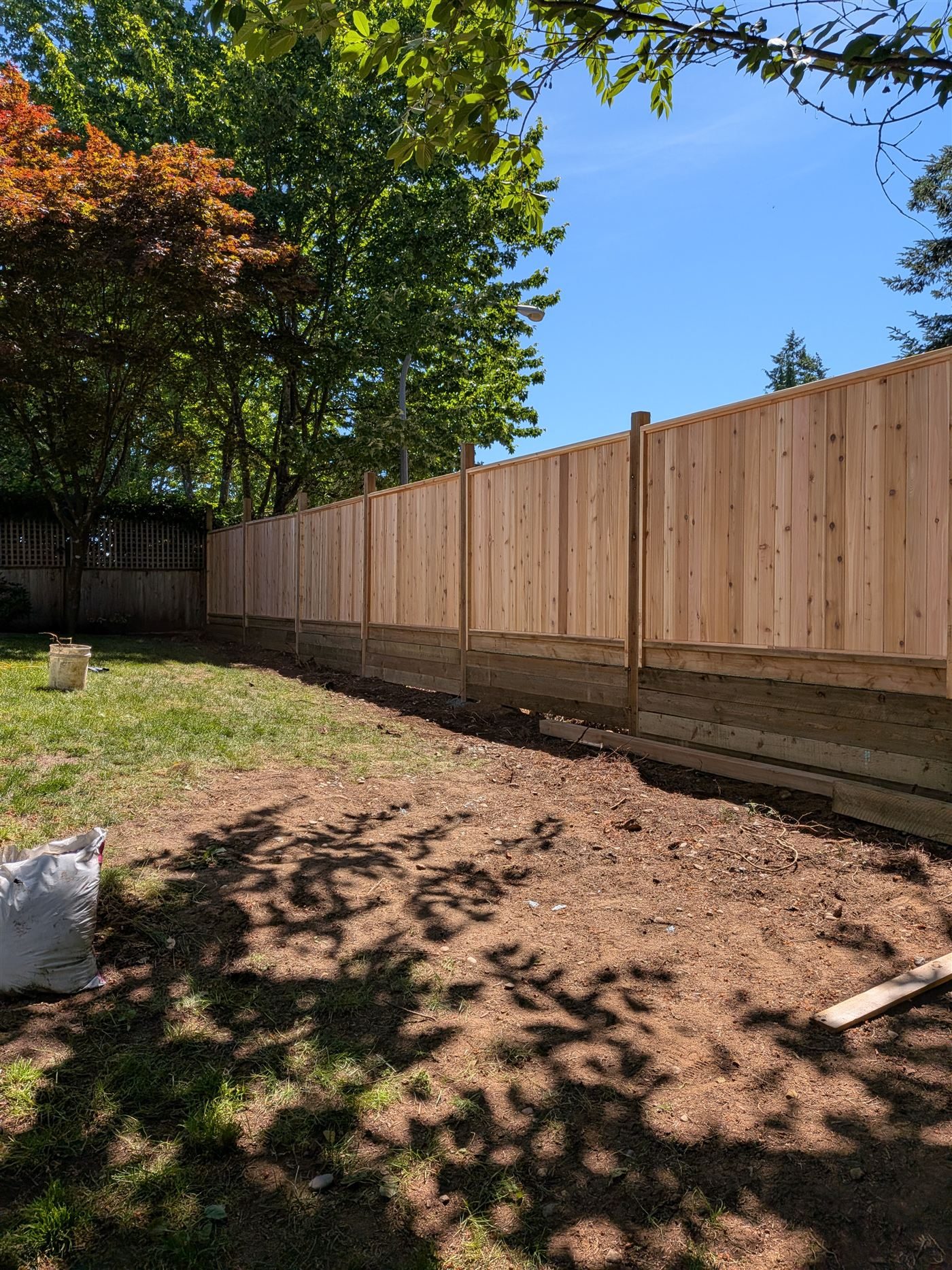
Look closely at the base of our fences — including the photo at the top of this page — and you'll see it: a treated course where the fence meets soil, with board-on-board western red cedar above it.
| Posts in concrete | Set below the surface in concrete footings, with water shedding away from the wood — the foundation decision that decides the fence's lifespan. |
|---|---|
| Treated base at soil level | The wettest zone of the fence gets the material engineered for it. The cedar above never touches soil, so its natural resistance is never asked to do a job it wasn't built for. |
| Cedar panels, capped | Board-on-board western red cedar with capped tops — full privacy, finished from both sides, and stable through wet-dry cycles. |
| Coastal-grade hardware | Black corrosion-resistant hardware and hidden fasteners — rated for treated lumber and chosen for salt-influenced air. |
Not sure what your fence line needs?
Every quote starts with a site visit — we look at your grade, drainage and exposure, and spec each material where it belongs. One fixed written price, a written workmanship warranty, and the old fence hauled away.
The questions homeowners ask most.
Which is better for a fence in BC — cedar or pressure-treated?
They solve different problems. Cedar resists decay naturally, stays straight, and looks like a finished product. Pressure-treated costs less upfront and suits ground contact, but commonly warps, twists and checks as it dries. Most good BC fences use both: treated wood at the ground, cedar where you see it.
Why do fences use pressure-treated wood at the bottom?
The base of a fence lives in soil moisture, and even naturally durable cedar is vulnerable in prolonged ground contact. Ground-rated treated lumber is designed for exactly that zone — a treated base board protects the cedar panels above from ever touching soil.
Does pressure-treated look as good as cedar?
Not really, and it is not meant to. Fresh treated lumber carries a green or brown cast and a utilitarian finish, and it commonly moves as it dries. Cedar's grain, colour and stability are why it is the visible face of premium fences.
Is a full pressure-treated fence cheaper?
Upfront, yes. Over the fence's life the gap narrows — twisted and checked boards still need replacing for appearance and fit. And length, height, grade and gates move total cost far more than board choice alone; our cost guide breaks that down.
How long will the cedar part last?
A well-built cedar fence in this climate commonly lasts 15 to 25 years — construction and drainage decide which end of the range. The full picture is in our cedar fence lifespan guide.
What does Ironwood Grounds actually build with?
A hybrid: posts set in concrete, a ground-rated treated base where the fence meets soil, and board-on-board western red cedar panels with capped tops and corrosion-resistant black hardware above. Each material where it is strongest.
Sources, and an honest note.
Cedar's material properties — dimensional stability, resistance to warping and twisting, and its limits in ground contact — are documented by its industry association:
Western Red Cedar Lumber Association — characteristics & properties of western red cedar
The rest is how we build on the Peninsula, visible in the project photos across this site. We don't publish per-board pricing because material is only one of seven factors that move a fence quote — the honest number comes from a site visit, in writing.
Last reviewed: August 26, 2026.
Related guides.
The right material in the right place — quoted in writing.
Tell us a little about the property and we will set a site visit — usually within one business day — then put one clear written price in your hands, materials specified.