
15 to 25 years — and why the range is that wide.
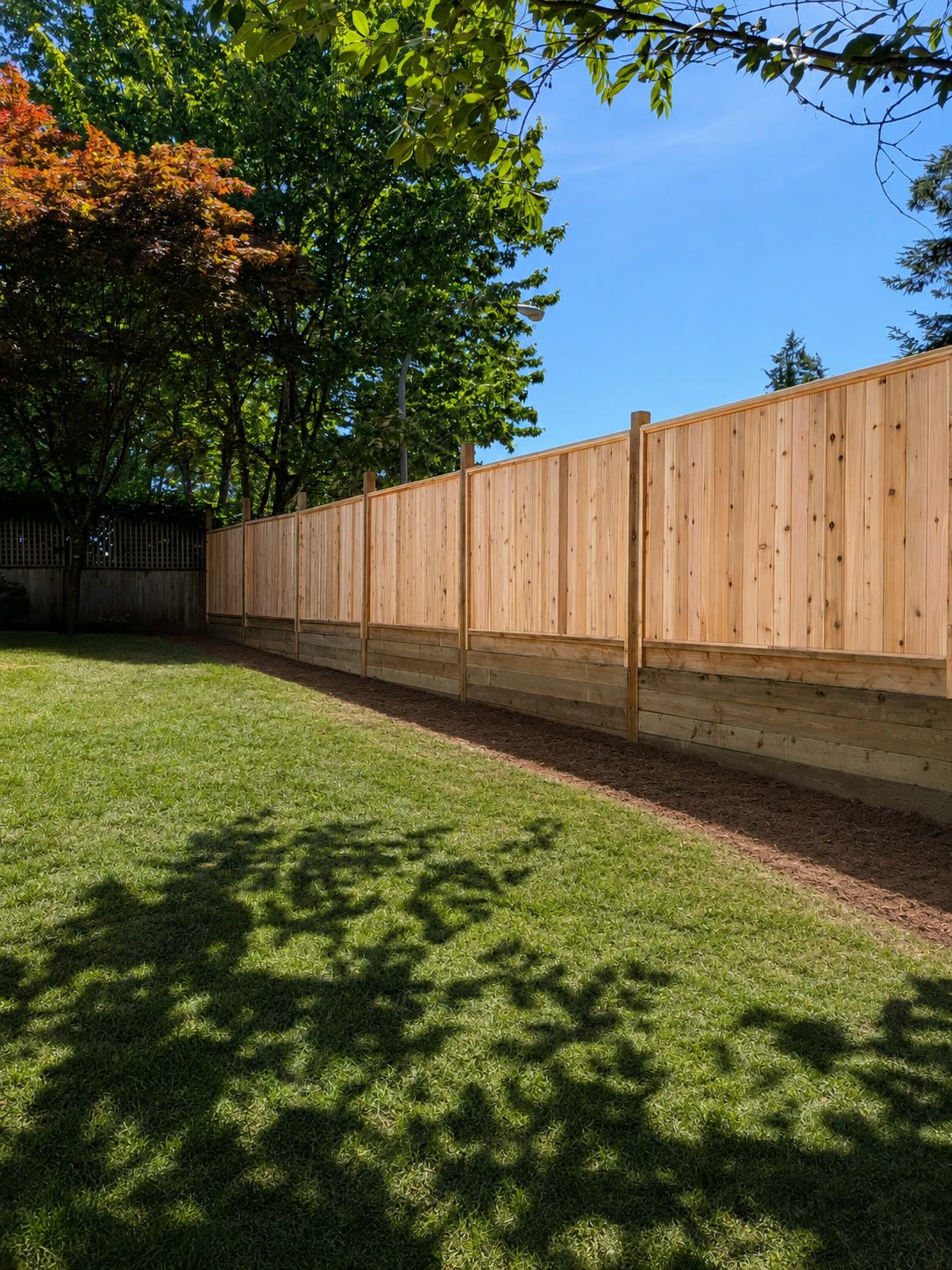
Western red cedar is naturally suited to the coastal BC climate — it resists rot and insects on its own, stays dimensionally stable, and weathers to a soft silver-grey rather than breaking down. In this climate a well-built cedar fence commonly lasts 15 to 25 years, and the Western Red Cedar Lumber Association puts it simply: properly finished and maintained, cedar delivers decades of trouble-free service. Which end of the range your fence reaches comes down to three things: how the posts were set, how water behaves at the base of the fence, and the quality of the hardware holding it together.
| Posts set in concrete, water shed away | The single biggest factor. Posts fail first because their base lives in wet soil for months every winter — concrete footings with water shedding away from the wood, rather than pooling against it, add years by themselves. |
|---|---|
| Board-on-board construction | Overlapping boards stay private and straight as the cedar dries and moves. Cedar's low shrinkage and resistance to warping and twisting — superior to other coniferous woods, per the WRCLA — is what keeps the run looking built rather than weathered. |
| Corrosion-resistant hardware | In coastal air, cheap fasteners corrode, streak the wood and eventually let go. Black corrosion-resistant hardware and hidden fasteners cost little upfront and quietly outlast the difference. |
| Air and light at the base | A fence that can dry out between rains lasts longer. Keeping soil, mulch and vegetation off the bottom boards — and sprinklers off the fence line — removes the constant-moisture conditions rot needs. |
| Capped posts and rails | End grain drinks water. Caps shed rain off the most vulnerable surfaces of the fence — a small detail with a long compounding effect. |
What shortens a fence's life.
| Constant moisture at the base | Low spots, downspouts discharging along the fence line, and daily sprinkler soak keep the bottom of the fence wet year-round. Even cedar's natural decay resistance has limits in prolonged ground contact — the WRCLA advises preservative treatment for wood that stays in contact with the ground, which is exactly the condition a badly drained post lives in. |
|---|---|
| Soil and planting against the boards | Beds mounded against the fence, ivy through the panels, and grass clippings piled at the base hold moisture on the wood and feed rot from the bottom rail up. |
| Posts set without proper footings | A post in bare soil, or in a shallow concrete collar that cups water, starts its decay clock immediately. This is the difference you cannot see at handover and cannot miss in year ten. |
| Corroding fasteners | Standard bright fasteners in salt-influenced coastal air stain the cedar black and lose their grip as they corrode — panels loosen long before the wood itself fails. |
Worth repeating: grey is not failure. Cedar weathering to silver-grey is cosmetic — the wood underneath keeps its natural resistance. If you prefer the warm tone, cedar holds a stain well; that is an appearance decision, not a survival one.
We build for year twenty, not year one.
Concrete-set posts, board-on-board western red cedar, capped tops and corrosion-resistant black hardware — the construction choices above are simply how every Ironwood fence goes in. Fixed written quote, written workmanship warranty, old fence hauled away.
The questions homeowners ask most.
How long does a cedar fence last in Metro Vancouver?
A well-built western red cedar fence in this climate commonly lasts 15 to 25 years, depending on exposure and upkeep. Concrete-set posts, board-on-board construction and corrosion-resistant hardware are what carry it to the long end of that range.
Does cedar turning grey mean the fence is failing?
No. Western red cedar naturally weathers to a soft silver-grey; the change is cosmetic, not structural. Grey boards on solid posts are a healthy fence. If you prefer the warm tone, cedar holds a stain well.
What fails first on a cedar fence?
The posts, at ground level. Soil holds winter moisture against the base of the post, and wood in prolonged ground contact is where decay starts — so posts commonly fail years before the panels above them. That is also why post replacement rescues most "failing" fences: see our repair-or-replace guide.
Does a cedar fence need to be stained or sealed?
Not to survive — cedar left natural turns silver-grey and keeps its decay resistance. Staining is an appearance choice that also slows surface weathering; if you want the warm colour kept, plan to renew the finish periodically.
What shortens a cedar fence's life the most?
Constant moisture at the base: poor drainage, soil or mulch piled against the boards, sprinklers soaking the same section daily, and posts set without proper concrete footings. Corroding fasteners are the other quiet killer in coastal air.
Is it worth repairing a 15-year-old cedar fence?
Often, yes — if the failures are isolated. Posts can be replaced individually while sound panels stay in place. When rot is widespread along the run, replacement is usually the better value — the honest test is in our repair-or-replace guide.
Sources, and an honest note.
Lifespan ranges reflect our experience building and repairing fences on the Peninsula; cedar's material properties are documented by its industry association:
Western Red Cedar Lumber Association — characteristics & properties of western red cedar
No one can promise a specific fence a specific number of years — exposure, drainage and construction all differ by yard. The ranges here are honest, not guaranteed.
Last reviewed: August 26, 2026.
Related guides.
A fence built to reach twenty-five.
One site visit, one fixed written quote — posts in concrete, board-on-board cedar, hardware chosen for the coast, and a written workmanship warranty behind it.