

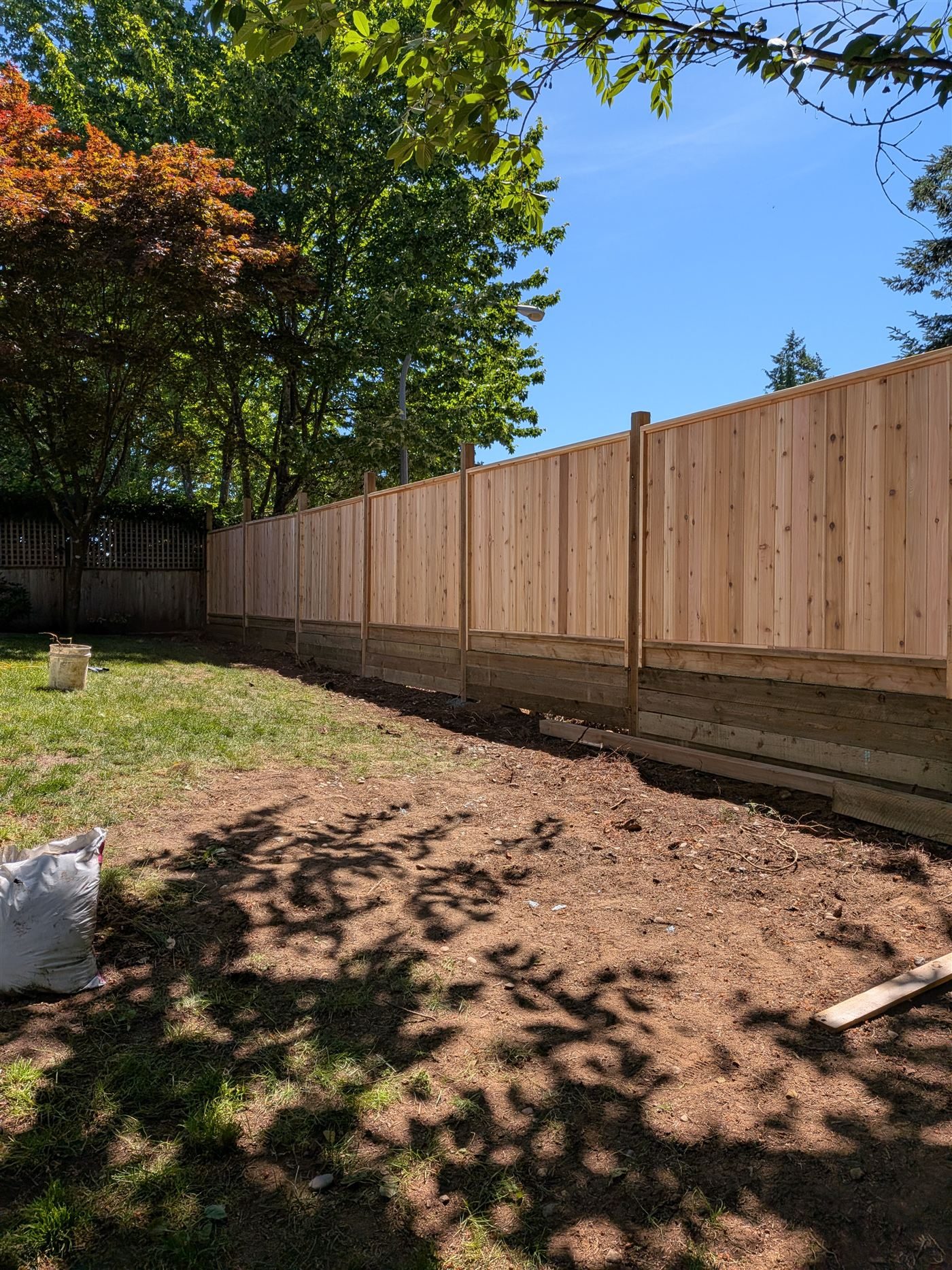
Location decides ownership.
In British Columbia, who pays for a fence comes down to where it sits. A fence built entirely on one owner's property belongs to that owner — they decide on it and they pay for it. A fence that sits on the property line belongs, in a practical and legal sense, to both neighbours: each is generally responsible for half the reasonable cost of building or repairing it. What you cannot do is build a new shared fence — or tear out an existing one — without involving your neighbour. This is general information, not legal advice; the sources are listed at the bottom of this page.
| Fence fully on your property | Yours. You decide the style, height (within municipal rules) and timing, and you pay the full cost. Your neighbour has no say — and no bill. |
|---|---|
| Fence on the property line | Shared. Neighbours on either side of a boundary fence are generally equal partners in it, and each pays half of the reasonable cost to build or repair it — even if the fence was built by a previous owner. |
| One neighbour wants an upgrade | Split the basics, not the extras. Only reasonable costs are shared. If your neighbour wants a premium design beyond what is needed, the extra cost is theirs — not yours. |
Need a shared-fence quote both neighbours can review?
Repairing one failed post or replacing the full line? We do both. One site visit produces one fixed written quote — tear-out, posts, panels, gates and haul-away included — a single document both owners can read before anyone commits to anything.
One section replaced, the rest kept.
From a recent Ironwood Grounds job: the old chain-link stretch came out and new board-on-board cedar and a gate went in — while the sound fencing beside it stayed. You only pay for the fence you actually need — the same approach we take on fence repair in South Surrey and across the Peninsula.
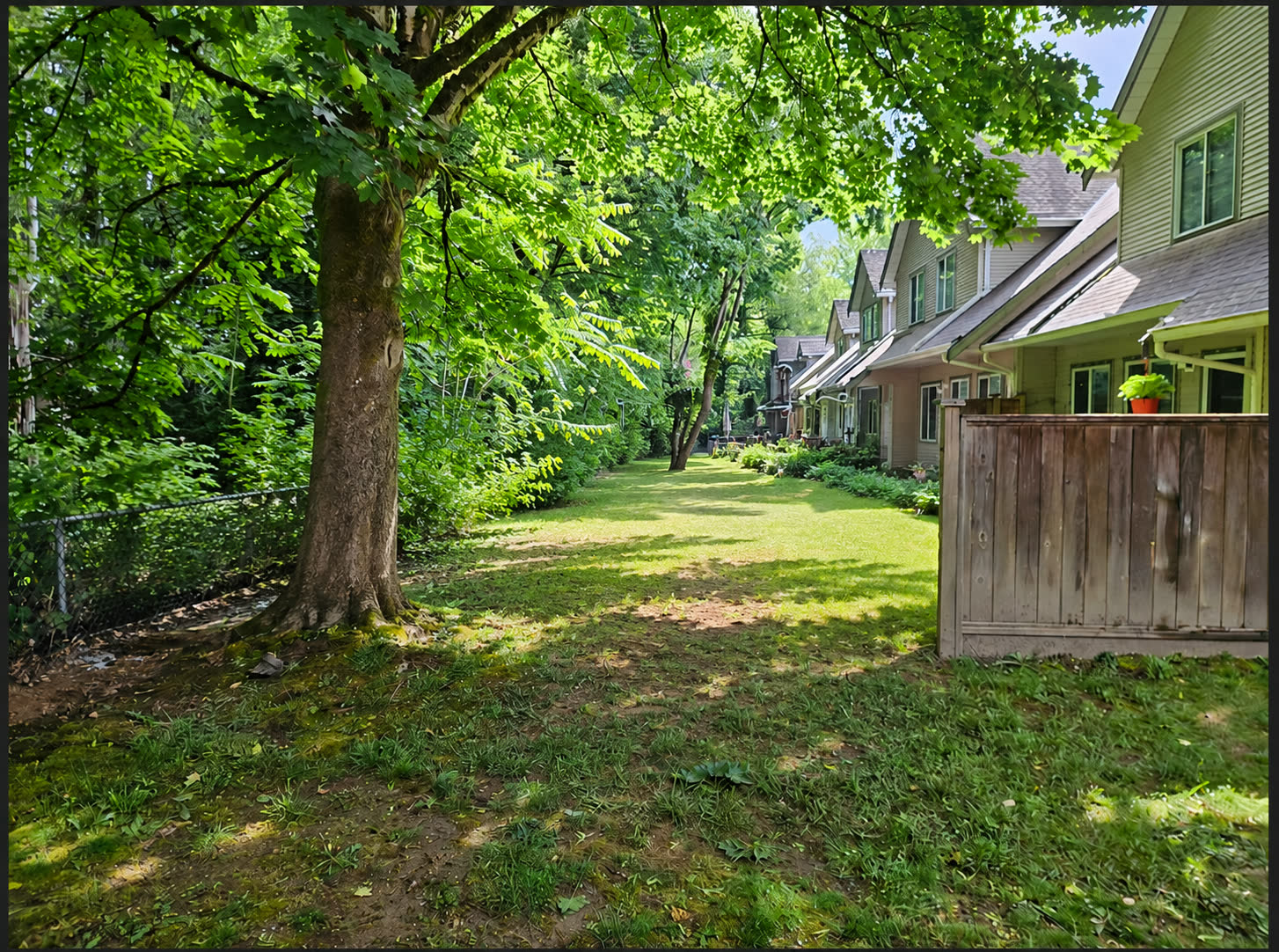
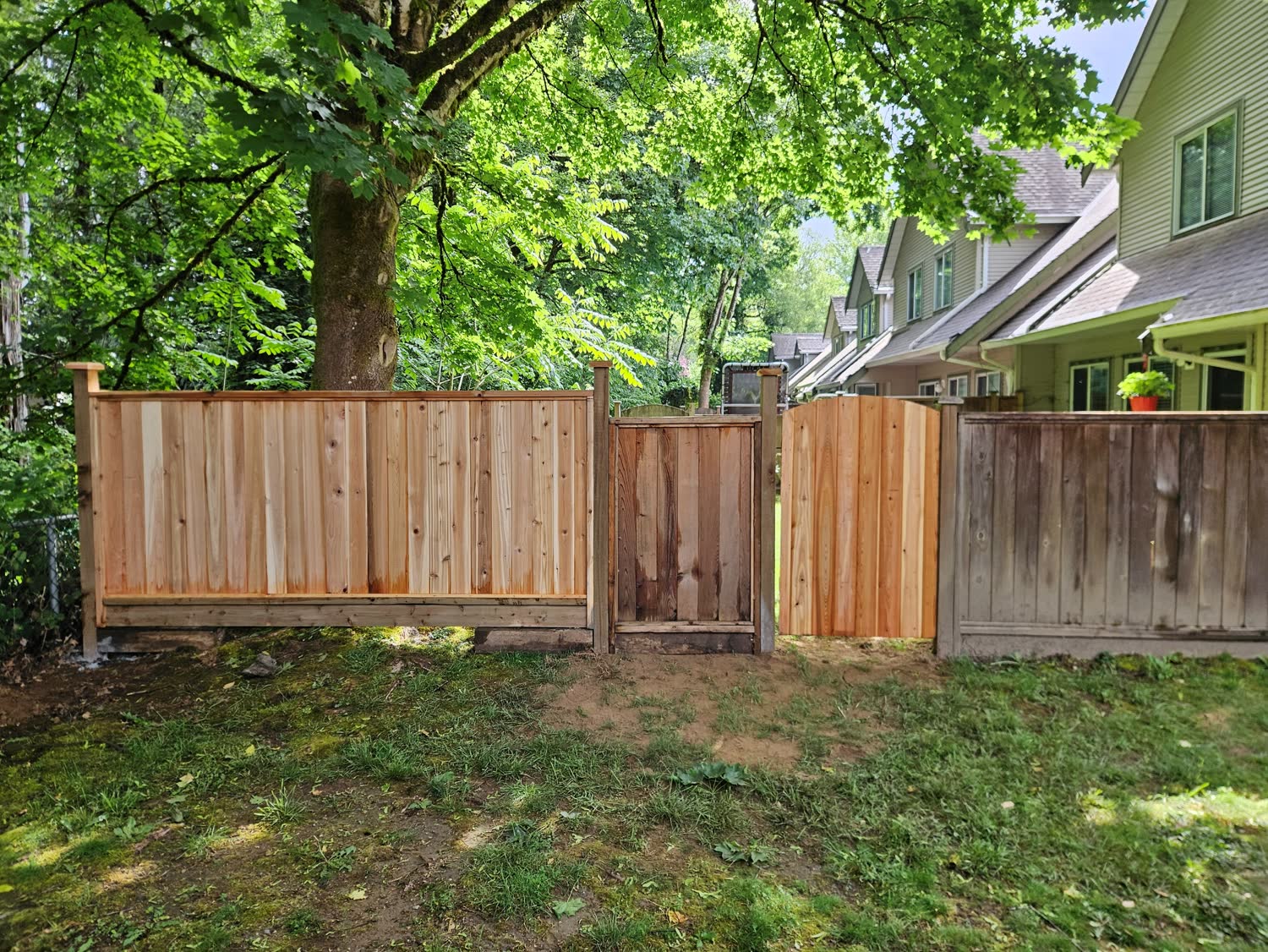
A real Ironwood Grounds project — one section replaced with board-on-board cedar and a new gate; the fence beside it stayed.
Four steps before the first post comes out.
| 01 — Talk first | Most fence disputes are really communication problems. Tell your neighbour what you are planning before you book anything — especially if the fence sits on the line. |
|---|---|
| 02 — Agree in writing | Style, height, materials, timing and the cost split. A short written agreement — even an email both sides reply to — prevents almost every argument later. |
| 03 — Share real quotes | Get two or three written quotes and share them. It is much easier to agree on a number neither of you picked. And ask whether the whole line really has to go — a fence repair that replaces a few failed posts or panels is often a far smaller bill to split. |
| 04 — Don't demolish first | Removing or replacing an existing boundary fence without your neighbour's consent can require their agreement — or a court order. When in doubt, get advice before the first post comes out. |
If agreement isn't happening.
You always have the option to build entirely on your own side of the line, at your own cost — then the fence is simply yours. For a shared fence where costs or removal are disputed, mediation is cheaper and faster than court, and a lawyer can advise on your specific situation. Every property and history is different, which is why this page is general information rather than legal advice.
Our companion guide covers Surrey's fence height and property-line rules, with separate guides for Delta and White Rock — the numbers that decide what you may build, separate from who pays.
The questions neighbours ask most.
Is my neighbour legally required to pay for half the fence?
If the fence sits on the property line, neighbours are generally equal partners in it and each pays half of the reasonable cost of building or repairing it — even if a previous owner built it. But no one can simply impose a brand-new shared fence and demand half; agreement comes first. Circumstances differ, so treat this as general information, not legal advice.
Can I build a fence without my neighbour's permission?
Yes — if it sits entirely on your own property, within your municipality's height and placement rules. Then it is your fence and your expense, and your neighbour's consent is not required. The moment it sits on the property line, it becomes a shared decision.
The fence was there before I bought the house. Is it still shared?
Generally, yes. Responsibility for a property-line fence attaches to the property, not to whoever built it — so the current owners on both sides share it, even if the fence was built by previous owners.
Can my neighbour make me pay for a fancier fence than we need?
No. Shared costs cover what is reasonable — a solid, serviceable fence. If your neighbour wants premium materials or a decorative upgrade beyond that, the difference is theirs to pay.
What if we can't agree on replacing the fence?
You can always build on your own side of the line at your own cost. For an existing boundary fence, removing or replacing it without agreement can require your neighbour's consent or a court order — mediation or legal advice is the practical next step.
Do height rules still apply to a shared fence?
Yes. Who pays and what you may build are separate questions. Surrey, White Rock and Delta each set their own fence height and placement rules — see our guide to Surrey's fence height rules for the local numbers.
Sources, and an honest disclaimer.
This page is general information for homeowners in Surrey, White Rock and Delta — it is not legal advice, and your situation may differ. It draws on People's Law School, a BC not-for-profit legal education resource:
Fences and neighbours — People's Law School
Do neighbours have to split the cost to repair a fence? — People's Law School
For a dispute, a property-specific question, or anything heading toward removal of an existing fence, speak with a lawyer — and confirm the boundary itself with a BC land surveyor before building on a line.
Last reviewed: July 31, 2026.
Replacing a shared fence? Get the number in writing.
One site visit, one fixed written quote that covers tear-out, posts, panels, gates and haul-away — a document both neighbours can review before anyone commits. We are happy to walk the line with both owners; the agreement between neighbours is yours to make.