

The numbers that matter.
Under White Rock Zoning Bylaw No. 2506, a fence can be up to 2.0 metres (about 6.5 feet) high and can sit on any part of the lot. The exception is the corner: within 4.5 metres of an exterior lot corner, no fence, wall or similar structure can be over 1.0 metre. Height is measured from natural grade to the highest point of the fence, so lattice and post caps count.
Verified September 29, 2026 against White Rock Zoning Bylaw No. 2506
| Anywhere on the lot — 2.0 m | A fence may be sited on any portion of a lot and must not exceed 2.0 m, or 6.56 ft (s. 4.12.2). The general fence section sets no separate front yard limit. |
|---|---|
| Exterior lot corner — 1.0 m | No fence, wall or similar structure over 1.0 m (3.28 ft) within 4.5 m (14.76 ft) of an exterior lot corner: where an exterior side lot line meets the front or rear lot line at an interior angle of 135° or less (s. 4.12.1). The bylaw includes a diagram. |
| Measured from natural grade | Fence height is the vertical distance from the highest point of the fence to the natural grade at that point (s. 3.3). Natural grade is the grade before any construction or alteration, as determined by a BC Land Surveyor. |
| Pool fence — at least 1.0668 m | Under Building Bylaw No. 1928, s. 23.3, a pool must be fully enclosed by a fence of at least 1.0668 m (3.5 ft), with self-latching gates and no member that makes the fence easy to climb. |
Planning a new line, or replacing a tired one?
White Rock's hillside lots make fence height a real design question. We check the corner rule, the grade and any retaining walls during the quote, before a single post goes in. One site visit, one fixed written quote, old materials hauled away.
No separate front-yard limit, but watch the corner.
This is the biggest difference from Surrey and Delta, which both cap front-yard fences at 1.2 metres. White Rock's general fence section lets a 2.0 m fence sit anywhere on the lot, front yard included. Whether a 2.0 m wall of cedar along the street suits the house is a separate question, and development permit areas, restrictive covenants and strata bylaws can still set tighter rules for your property.
On a corner lot, the 1.0 m cap near the corner applies to a fence, wall or similar structure. It covers the corner where the side street meets your front lot line, and also where it meets your rear lot line. Plan the step-down before you order material.
From natural grade, to the highest point.
White Rock measures a fence from the natural grade, meaning the ground before anyone built on or reshaped it, up to the fence's highest point. Two practical results: a lattice topper, cap rail or post cap all count toward the 2.0 m, and ground that has been built up with fill does not reset the starting point. On a sloped lot, each stretch of fence is measured where it stands, so fences on a slope are usually stepped.
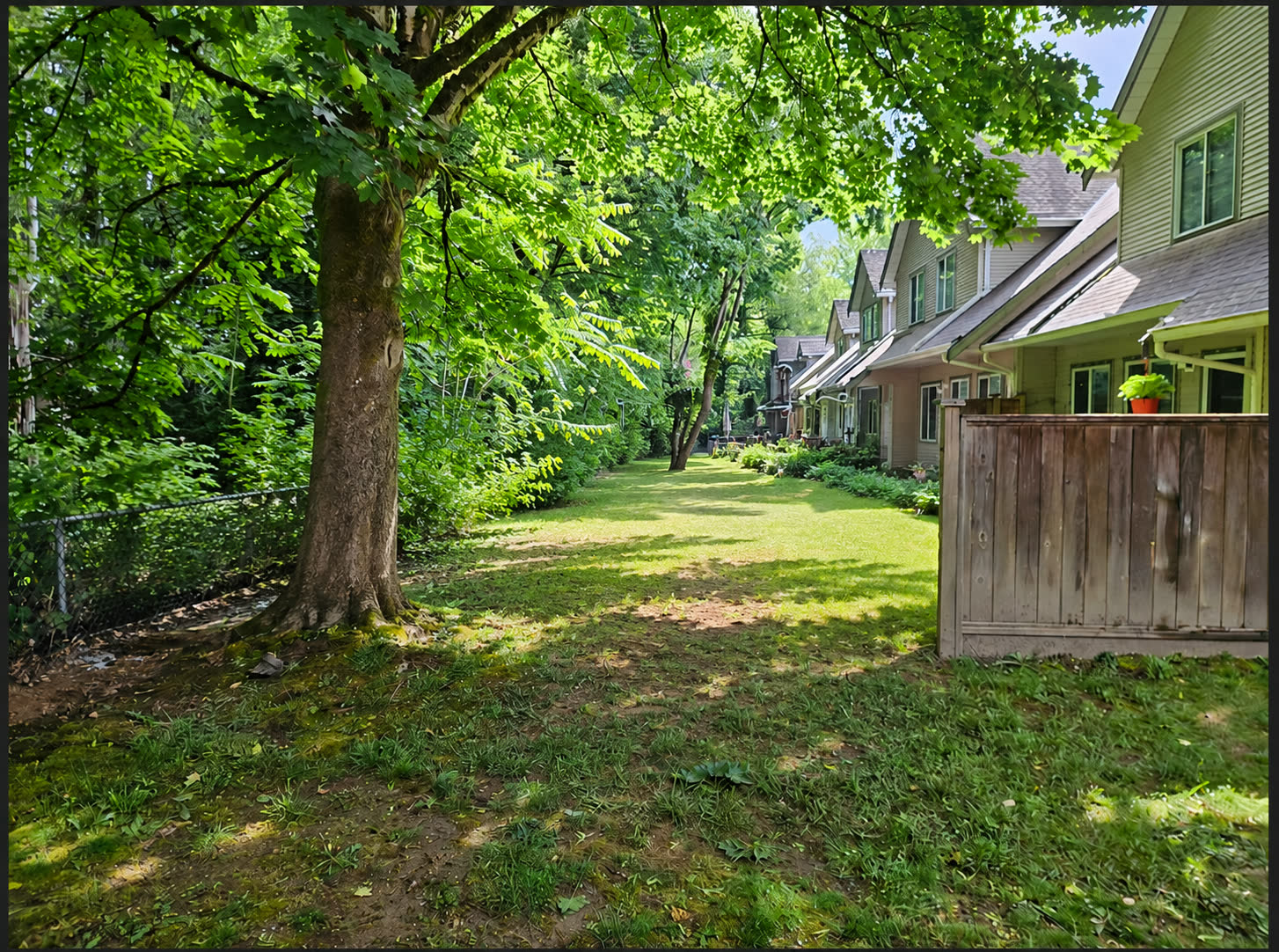
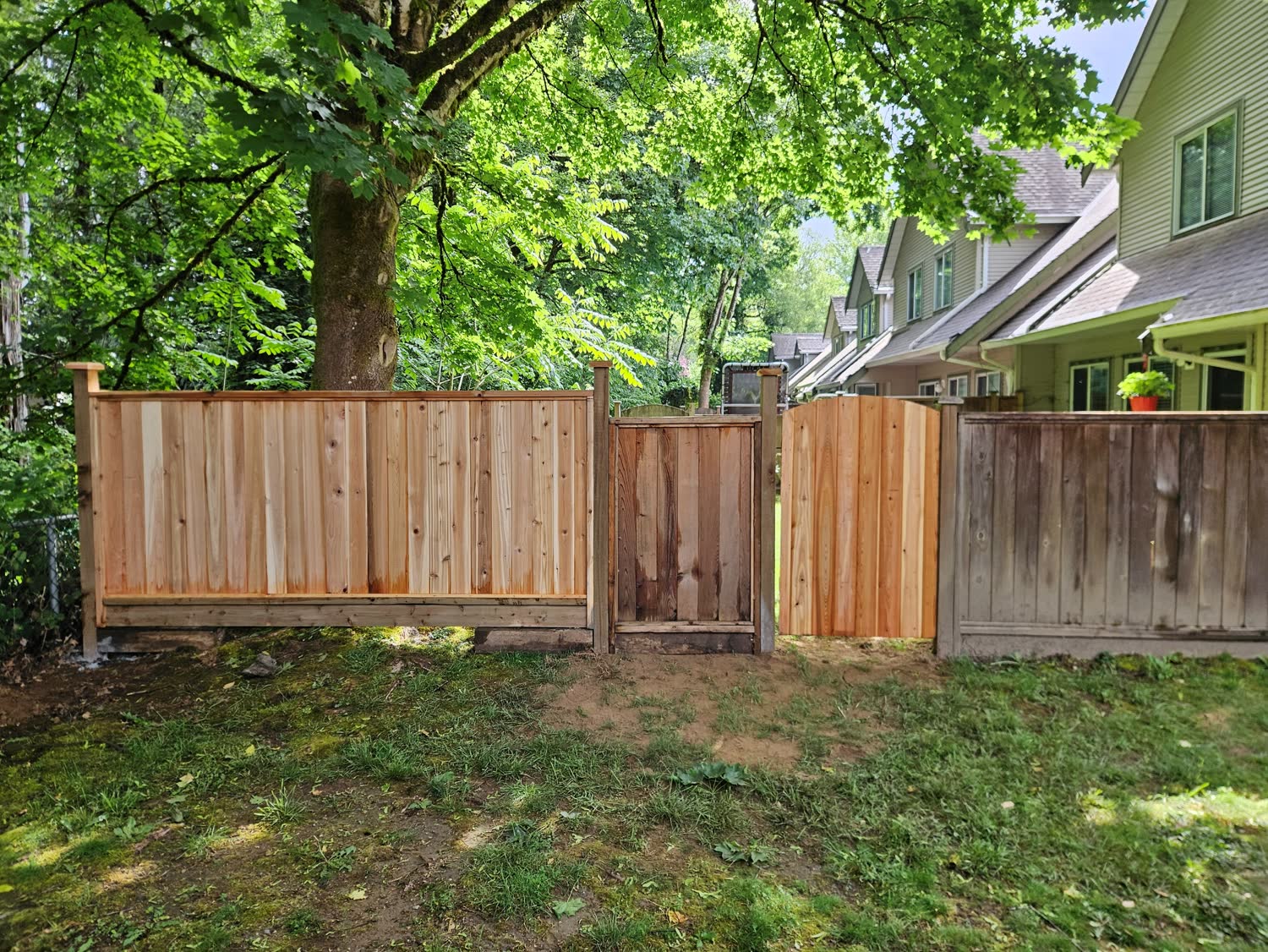
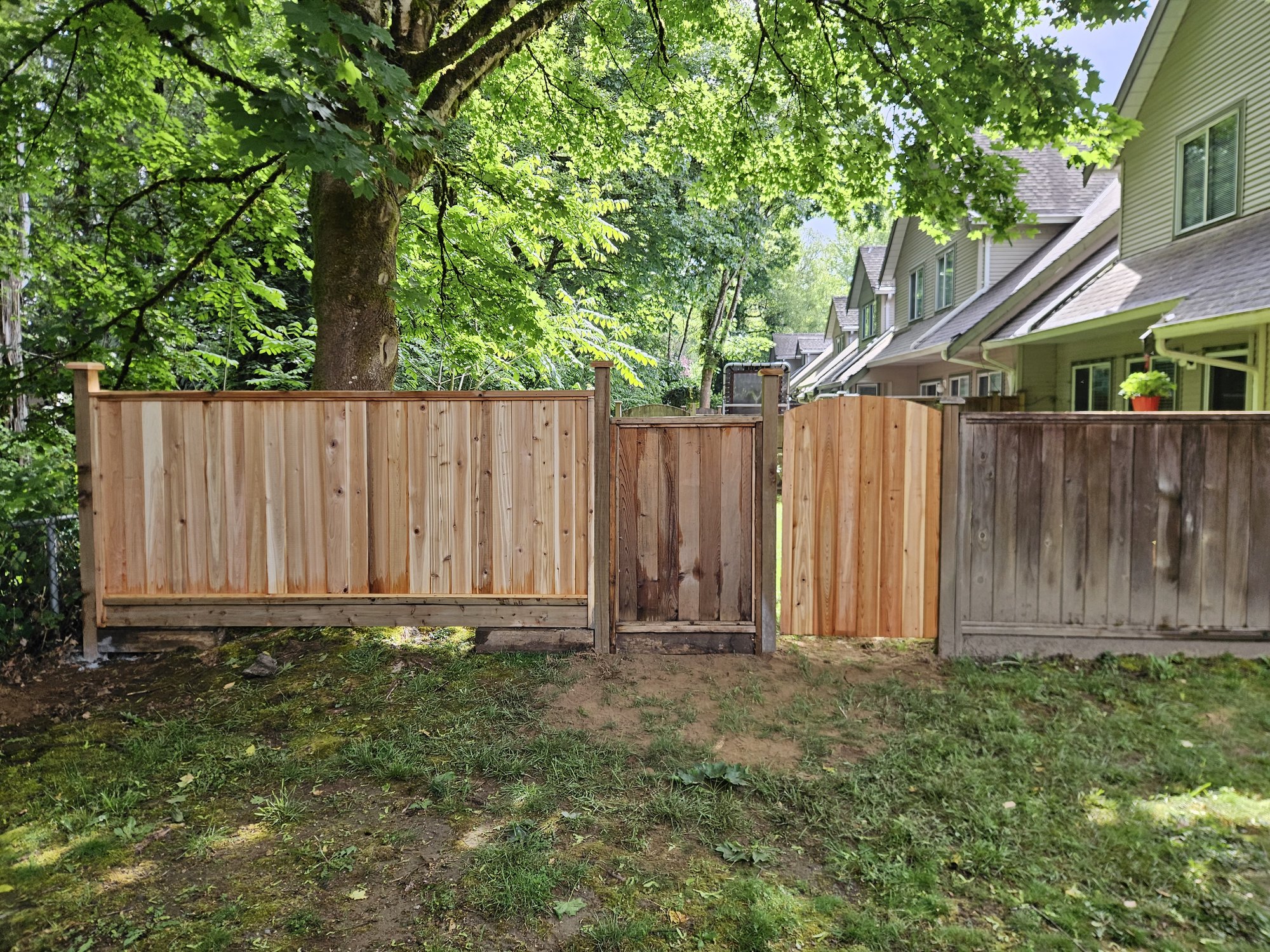
A real Ironwood Grounds project: one section replaced with board-on-board cedar and a new gate, the fence beside it left in place.
On a retaining wall? Check the grade first.
White Rock's zoning bylaw has no separate formula for a fence on top of a retaining wall. Because fence height runs from natural grade, where a wall holds back fill that raised the ground, that added height can count toward the 2.0 m. Where a wall simply holds the original slope, ask the City how it will measure your fence before you build.
The wall itself has its own rules. Under Building Bylaw No. 1928, s. 20, and the City's retaining-structures bulletin, a building permit is required for a retaining wall over 1.2 m, or one on land steeper than 2:1, with drawings sealed by an engineer. A single wall under 1.2 m does not need a building permit. Work near a protected tree can also need a Tree Management Permit, and properties in an environmentally sensitive area or a geotechnical hazard area can have added requirements.
Do you need a permit?
Honest answer: we could not find a City of White Rock page that states plainly whether a fence on its own needs a building permit, so we are not going to guess. Check with the City's Building Department before you build, especially for anything close to 2.0 m, near a corner, or tied into a retaining wall. Retaining walls over 1.2 m, or on slopes steeper than 2:1, do need a building permit.
Just past the city line, the rules change.
White Rock is bordered by South Surrey, and a mailing address that says "White Rock" can sit in the City of Surrey. Check which city your property tax notice comes from, then use the right guide: Surrey fence height rules or, for Ladner and Tsawwassen, Delta fence height rules. If your question is who pays for a shared fence, see who pays for a fence between neighbours in BC.
The details homeowners ask about.
How high can a fence be in White Rock?
Up to 2.0 metres (about 6.5 feet), and the zoning bylaw lets it sit on any part of the lot, front yard included. The exception is the area near an exterior lot corner, where the limit drops to 1.0 metre.
Is there a lower front yard fence limit in White Rock?
Not in the zoning bylaw's fence section. Unlike Surrey and Delta, White Rock Zoning Bylaw No. 2506 does not set a separate front yard fence height; the 2.0 metre limit and the corner rule apply. Development permit areas, covenants and strata rules can still add restrictions.
What is the corner lot fence rule in White Rock?
No fence, wall or similar structure over 1.0 metre within 4.5 metres of an exterior lot corner. That is the corner where an exterior side lot line meets the front or rear lot line at an interior angle of 135 degrees or less.
How is fence height measured in White Rock?
From natural grade to the highest point of the fence at that point. Natural grade is the ground level before any construction or alteration, as determined by a BC Land Surveyor, so lattice, caps and post tops all count toward the limit.
Does a retaining wall change the fence height rule in White Rock?
The zoning bylaw has no separate formula for a fence on a retaining wall. Because height is measured from natural grade, fill placed behind a wall can count toward the 2.0 metre limit. Separately, a retaining wall over 1.2 metres needs a building permit and an engineer's design.
Do I need a permit to build a fence in White Rock?
We could not find a City of White Rock page that answers this plainly, so check with the City's Building Department before you build. Retaining walls over 1.2 metres, or on slopes steeper than 2:1, do need a building permit.
How high does a pool fence have to be in White Rock?
At least 1.0668 metres (3.5 feet) under the City's Building Bylaw, fully enclosing the pool, with gates that return to a latched position on their own and nothing on the fence that makes it easy to climb.
Sources, and an honest disclaimer.
This page is general information, not legal advice. Bylaws change, and your property may have site-specific rules. Every number above was checked on September 29, 2026 against these City of White Rock sources:
- White Rock Zoning Bylaw, 2024, No. 2506 (consolidated June 2026): s. 4.12 (screening and fencing) and the s. 3.3 definitions of fence, height and natural grade.
- White Rock Building Bylaw No. 1928: s. 20 (retaining structures) and s. 23 (pool enclosures).
- City of White Rock bulletin BUILDING-13 — Retaining Structures (New and Replacement).
- City of White Rock — Permits and Planning resources & documents.
Before building, confirm the current requirements for your lot with the City of White Rock, your strata if you have one, and a surveyor if the property line or natural grade is in question.
Verified September 29, 2026.
Planning a fence near a limit? Ask first.
Tell us your street and what you are planning. We flag corner, grade and retaining-wall issues during the quote, before they become a problem with the City.