
Fence Staining
Cedar fences cleaned and stained on one side or both, in a semi-transparent or solid finish. Plants, siding and hardscape covered and protected while the work is done.
Washing, brightening and sanding, then a semi-transparent or solid stain for cedar fences and decks in South Surrey, White Rock and Delta. Booking for spring 2027 — join the waitlist and we'll contact you when booking opens.
A stain is only as good as the surface under it. Most of the work in a good finish is the prep — cleaning, brightening, sanding and dry wood — and that is what the quote is built around.
Cedar fences cleaned and stained on one side or both, in a semi-transparent or solid finish. Plants, siding and hardscape covered and protected while the work is done.
Ground-level cedar decks cleaned, sanded where needed and finished with a penetrating stain or sealer suited to foot traffic — boards, steps and fascia.
Grey, dirty or mildewed cedar cleaned with care — not blasted, which tears up the fibres — brightened where it needs it, and sanded where the surface has gone fuzzy or rough.
An existing finish that has faded or worn through cleaned and recoated. Where an old finish is peeling or the wrong type, the crew's quote should say what it takes to get back to bare wood.
The two finishes most cedar fences and decks end up with. Neither is right everywhere — the wood, the exposure and the look you want decide. Here is how they generally compare.
Tints the wood while letting the grain and texture show through — the look most people picture for cedar. It soaks in rather than forming a film, so it tends to wear by fading instead of peeling, and a recoat is mostly a clean and a fresh coat.
The trade-off is coverage: it will not hide mismatched boards, old stains or heavily weathered wood, and it lets more sun through than a solid finish.
Opaque colour that hides the grain, evens out mixed old and new boards, and gives the wood more protection from sun. It suits an older fence where the boards no longer match.
The trade-off is permanence: once a fence or deck is solid-stained, going back to a see-through finish means stripping it. On deck boards, a solid finish can wear through where people walk.
Left natural, western red cedar weathers to a soft silver-grey and keeps its natural decay resistance — grey is cosmetic, not failure. Staining is an appearance decision that also slows surface weathering. What decides whether a fence reaches the long end of its life is how the posts were set and how water behaves at the base; our cedar fence lifespan guide covers that.
If you want the warm colour kept, a stain is the way to do it — and it needs renewing periodically, more often on a sunny deck than a shaded fence.
Every staining quote covers the same ground, written out so nothing is assumed. No hourly rate.
Loose or split boards, popped fasteners and soft spots flagged first. Stain goes on after repairs, never over them.
Plants, siding, patios and anything close to the fence or deck covered or moved before any cleaning starts.
Dirt, mildew and grey surface fibres removed with care, and the wood brightened where needed, without tearing up the cedar.
The wood left to dry before any stain goes on, and sanded where the surface is fuzzy or rough — especially deck boards.
The finish you chose applied to the product's directions, in a dry weather window, covering faces, edges and end grain that can be reached.
Coverings removed, the area cleaned up, and a walkthrough of the finished fence or deck with you.
Timing: stain needs dry wood going in and dry weather while it cures. On the coast that generally means late spring through early fall, and a good crew reschedules rather than staining ahead of rain.
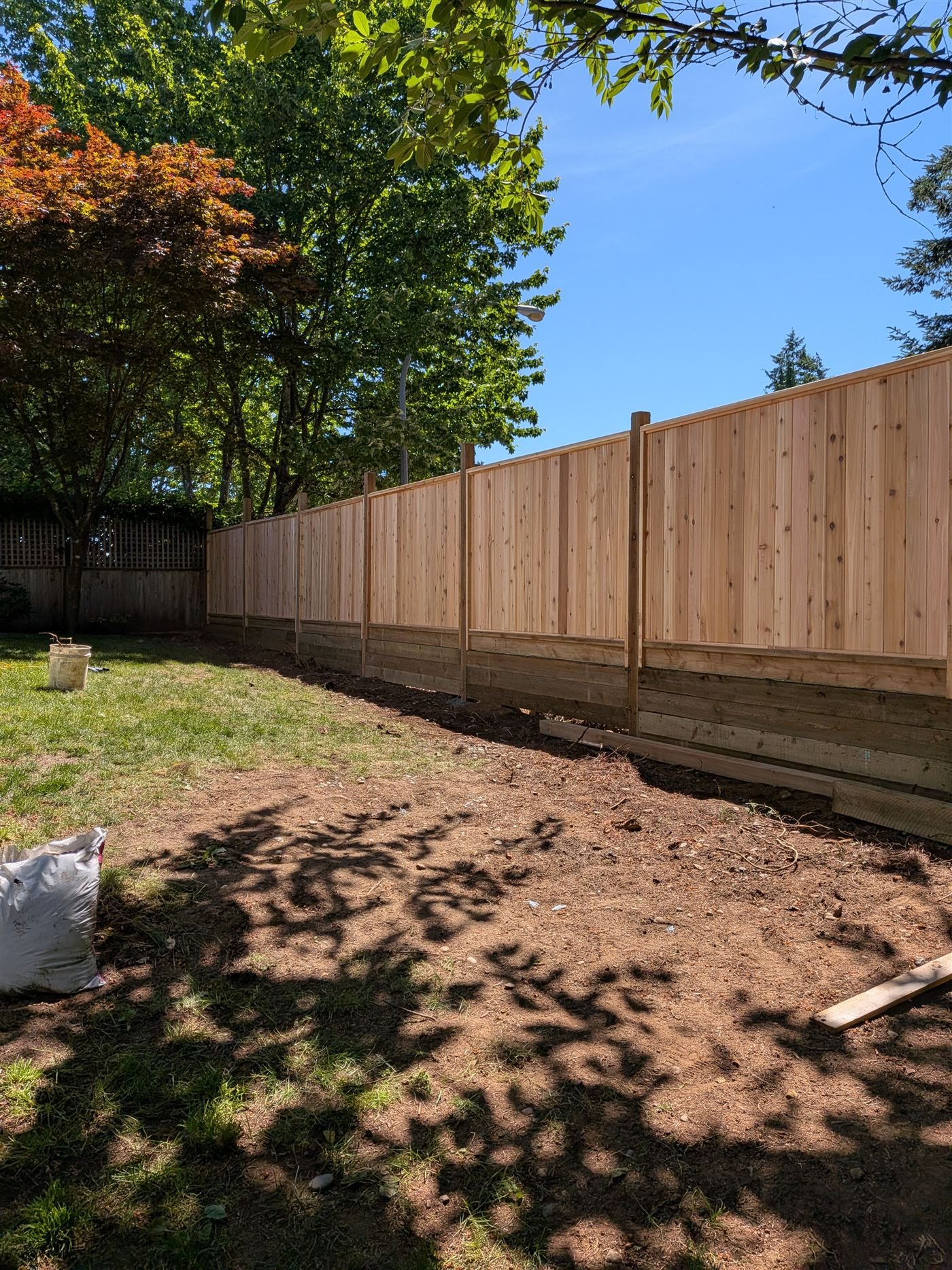
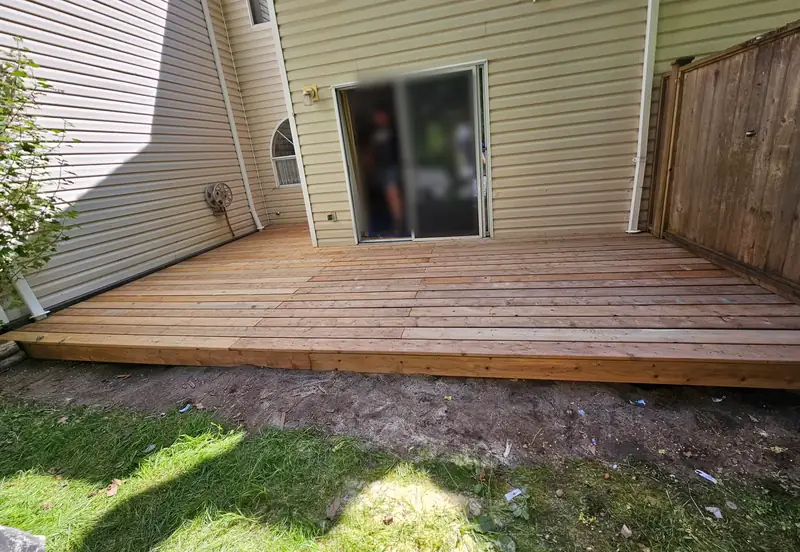
These photos are from Ironwood's own 2026 fence and deck builds — not staining jobs. They show the kind of bare cedar a stain or sealer goes on.
There is no per-foot price here, because prep varies more than the stain itself. These are the things the crew's fixed written quote is built from.
The length and height of the fence or the area of the deck — and whether one side of the fence or both.
How weathered, dirty or mildewed the wood is, which decides how much cleaning and brightening it needs.
Bare wood is simplest. A peeling or failing old finish may need stripping before a new one will hold.
Deck boards and rough, fuzzy surfaces often need sanding for the stain to go on evenly.
Semi-transparent or solid, and the product chosen, change both materials and coats.
Plants and structures close to the fence, plus any board or fastener repairs done first.
Ironwood does not quote, sign contracts or take payment. Booking for spring 2027 — join the waitlist and we'll contact you when booking opens. The crew visits, gives you a fixed written quote, contracts with you directly and does the work.
Ironwood Grounds takes spring 2027 waitlist requests across the Peninsula — South Surrey, White Rock, Ocean Park, Morgan Creek, Tsawwassen, Ladner and the wider Delta area.
Not to survive. Cedar left natural weathers to a silver-grey and keeps its natural decay resistance, so grey boards on solid posts are a healthy fence. Staining is an appearance choice that also slows surface weathering; if you want the warm colour kept, plan to renew the finish periodically. Our cedar fence lifespan guide explains what actually decides how long a fence lasts.
Semi-transparent stain lets the grain show through and tends to wear by fading rather than peeling, which makes recoats simpler — it is the usual choice for good cedar. Solid stain hides the grain, evens out mismatched or weathered boards and blocks more sun, but on a deck it can wear through in traffic areas and is hard to go back from. Ask the crew to walk you through both at the site visit.
It depends on sun and rain exposure, the product and the type of stain. Decks wear faster than fences because they take foot traffic and sun on a horizontal surface. A good sign it is time is when the colour has faded unevenly or water no longer beads on the surface.
It depends on the stain. New cedar has to be dry enough for the finish to soak in, and many manufacturers ask for a waiting period or specific prep on new wood first. The crew should follow the directions for the product you choose rather than a rule of thumb.
In a dry stretch. Stain needs dry wood going in and dry weather while it cures, so on the coast that generally means late spring through early fall. A good crew works to the product's label for temperature and drying time, and reschedules rather than staining ahead of rain.
Repairs come first, where they are needed. Loose or split boards, popped fasteners and soft spots are flagged at the crew's site visit, and stain goes on after repairs, not over them. Our fence repair page covers that side of the work.
Tell us whether it is a fence, a deck or both, roughly how big, and how it looks now, and we'll add you to the spring 2027 waitlist and contact you when booking opens.